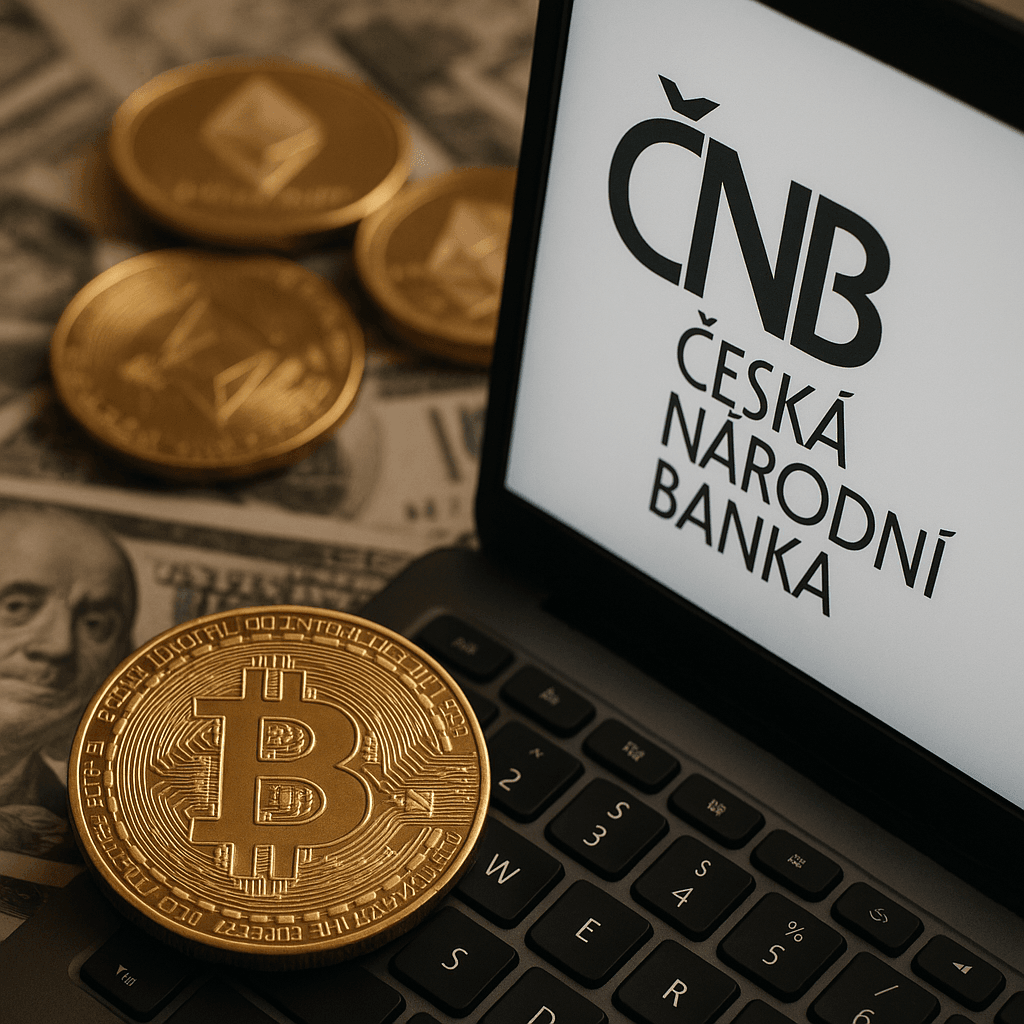
The Czech National Bank (ČNB) has quietly moved into the world of digital assets, announcing the creation of a $1 million crypto test portfolio to explore how decentralized finance and cryptocurrency markets might intersect with traditional monetary policy. The pilot initiative underscores how central banks are no longer merely observers — they are starting to experiment directly with crypto.
Why the Czech Central Bank Is Testing Crypto
The ČNB’s decision to deploy real funds into a crypto basket is rooted in its desire to understand the risks and mechanics of digital-asset markets. The test portfolio will give the bank first-hand exposure to volatility, custody challenges, and liquidity risks. Regulators at the ČNB believe that simulated—or even modest—actual participation will offer deeper insights than theoretical models alone.
By engaging directly in crypto markets, the bank can also track how stablecoins, tokenized assets, and cryptocurrencies behave under different macroeconomic conditions. This data could influence future regulatory frameworks, assist in designing a potential central bank digital currency (CBDC), or help the ČNB weigh how existing policies might adapt to a more tokenized financial future.
Implications for Financial Stability and Regulation
This pilot project is not just symbolic. As central banks worldwide debate the role of crypto, the ČNB’s experiment could shape how European regulators treat digital assets. The ČNB may use its learnings to craft risk guidelines, oversight mechanisms, or even reserve policies that include tokenized instruments.
However, critics warn of the risks. A central bank investing in volatile assets could face reputational danger if the portfolio suffers steep losses. Taxpayers and national stakeholders may question the prudence of allocating public funds to speculative markets, even on a small scale. So far, though, the ČNB emphasizes that the pilot is limited, controlled, and designed purely for research—not profit-seeking.
What This Means for the Broader Crypto Ecosystem
For the crypto industry, the move is a vote of confidence: a major European central bank believes that there is value in understanding how digital assets function. It signals more than a regulatory wink; it represents a potential structural shift where crypto is increasingly part of economic policy planning.
If the experiment proves successful, other central banks may follow suit, leading to broader institutional adoption and possibly accelerated CBDC development. The project could also increase legitimacy for tokenized financial instruments among traditional financial institutions.
Conclusion
The ČNB’s $1 M crypto test portfolio may appear modest in size, but its implications are anything but. By investing real capital into digital assets, the Czech central bank is exploring uncharted territory — one that could redefine how states interact with blockchain technology and digital finance. This experiment may mark the beginning of a new era in which central banks don’t just regulate crypto — they actively participate in it.