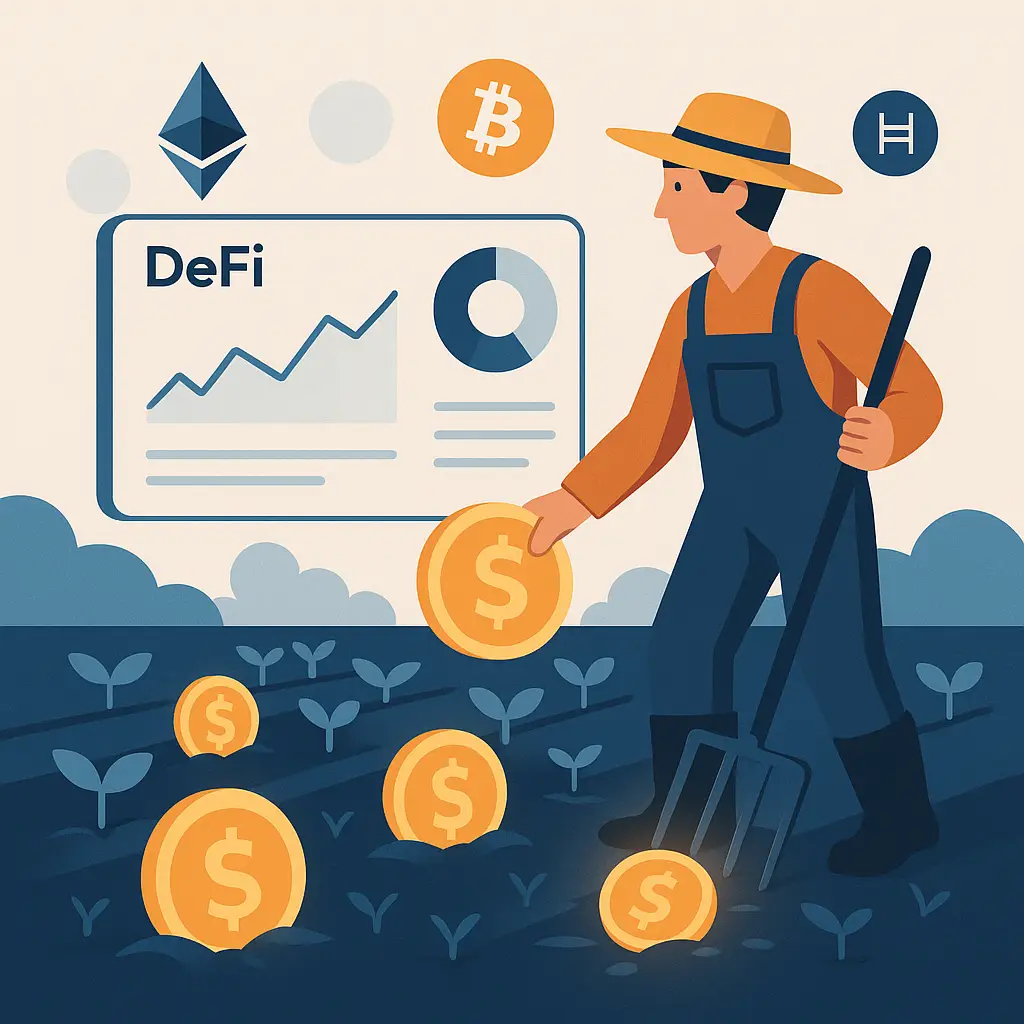
Decentralized finance (DeFi) has transformed the digital asset ecosystem, offering investors new ways to earn passive income through blockchain-based protocols. Among the most influential innovations are yield farming and liquidity mining, two mechanisms that allow users to generate returns by supplying capital to decentralized platforms. As billions of dollars continue to flow into DeFi, understanding how these systems work is no longer optional—it’s becoming essential for informed investors, institutions, and crypto enthusiasts alike.
This article breaks down the mechanics, risks, and real-world implementation of yield farming and liquidity mining, offering a clear and practical guide for anyone looking to explore the growing world of decentralized finance.
What Is Yield Farming? A Simple Explanation for a Complex Mechanism
Yield farming, often described as the engine of DeFi, involves optimizing returns by moving crypto assets across different decentralized protocols. At its core, yield farming explained simply means earning rewards—usually in additional tokens—for providing liquidity or staking assets in a platform.
Farmers strategically allocate their crypto to earn the highest possible yield, often combining lending, borrowing, and staking strategies. Returns can vary dramatically based on:
- Annual Percentage Yield (APY)
- Token emission schedules
- Protocol incentives
- Market volatility
Unlike traditional finance, yield farmers can shift capital within minutes, taking advantage of real-time yield variations, arbitrage opportunities, and protocol-specific bonuses.
Understanding Liquidity Mining: The Incentive Layer Behind DeFi Growth
While yield farming focuses on chasing returns, liquidity mining is about building liquidity for DeFi protocols. It works by rewarding users who deposit tokens into liquidity pools—critical infrastructure for decentralized exchanges (DEXs), lending markets, and derivatives platforms.
In a typical liquidity mining tutorial, users learn how to:
- Select a DeFi platform such as Uniswap, PancakeSwap, Aave, or Curve
- Pair tokens (e.g., ETH/USDC) to supply to a liquidity pool
- Receive LP (Liquidity Provider) tokens as proof of contribution
- Earn a share of trading fees plus protocol-issued reward tokens
These reward tokens, often called governance tokens, may provide voting rights or additional yield opportunities. Liquidity mining was a major catalyst for the explosive growth of DeFi in 2020 and continues to power the expansion of decentralized markets worldwide.
How Yield Farming and Liquidity Mining Work Together in Real DeFi Ecosystems
Although technically distinct, yield farming and liquidity mining operate in a complementary cycle:
- Liquidity mining attracts capital by rewarding liquidity providers.
- Yield farming amplifies rewards when farmers re-stake or reinvest earned tokens.
- Token incentives fuel protocol activity, creating deeper liquidity and more efficient markets.
- Higher liquidity generates user growth, which further increases farming returns.
The result is a self-reinforcing ecosystem where incentives, liquidity, and user participation work together to sustain DeFi protocols.
Key Risks Every Farmer Should Understand
Despite their lucrative potential, yield farming and liquidity mining carry significant risks that newcomers must understand before committing capital.
Impermanent Loss
When supplying liquidity to pairs with volatile assets, users may suffer reduced returns compared to simply holding the tokens.
Smart Contract Vulnerabilities
DeFi protocols are software-driven—and bugs or exploits can lead to immediate losses.
Market Volatility
Token prices can fluctuate rapidly, affecting APY and the value of rewards.
Regulatory Uncertainty
Global regulators are still assessing how DeFi fits into financial frameworks, which may impact accessibility in the future.
Understanding these risks is essential for building sustainable strategies.
How to Get Started: A Practical DeFi Liquidity Mining Tutorial
For beginners exploring the world of yield farming and liquidity mining, here’s a safe, structured approach:
- Choose a reputable DeFi platform with strong audits and track records.
- Start with stablecoin pools (e.g., USDC/DAI) to minimize volatility.
- Analyze APYs and reward structures before committing funds.
- Use hardware wallets or trusted DeFi wallets (e.g., MetaMask, Ledger).
- Monitor your positions regularly, especially in volatile markets.
As DeFi evolves, new protocols introduce novel incentives, cross-chain opportunities, and advanced yield optimization strategies. Beginners can grow gradually while gaining confidence and experience.
Conclusion: The Future of Yield Farming and Liquidity Mining
Yield farming and liquidity mining are more than just profitable tools—they are foundational mechanisms powering the decentralized financial revolution. Their ability to create permissionless, user-driven markets has reshaped how value flows across blockchain networks. While risks remain, innovations in security, cross-chain interoperability, and regulatory clarity are expected to strengthen these systems further.
As DeFi continues to mature, yield farming and liquidity mining will likely evolve into more stable, accessible financial instruments—offering new opportunities for investors, institutions, and anyone seeking to participate in the global shift toward decentralized finance.